Massage mainly works on muscle using gliding and kneading strokes, usually for relaxation or general tension. Myofascial release targets fascia — the connective tissue around muscles — with slow, sustained pressure held until restricted tissue softens. Massage helps you feel better; myofascial release is built to fix chronic restriction and pain at its source.
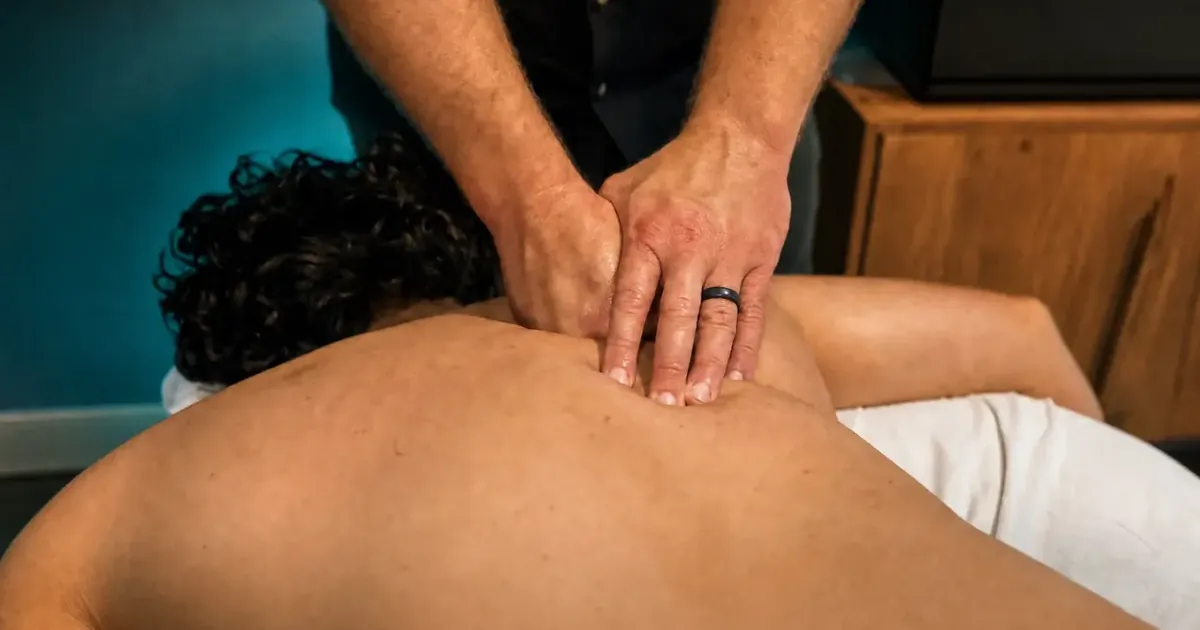
Both happen on a treatment table, both use hands, and both can feel great. So it's understandable that people use the terms interchangeably. But the technique, the goal, and the results are different — and choosing the wrong one is a common reason chronic pain keeps coming back.
What's the difference between myofascial release and massage?
Here's the side-by-side:
| Relaxation (Swedish) massage | Deep tissue massage | Medical massage | Myofascial release | |
|---|---|---|---|---|
| Main target | Muscle, overall tension | Deeper muscle layers | A specific clinical problem | Fascia and connective tissue |
| Technique | Long gliding strokes, kneading | Firm, slower strokes across muscle | Varies by goal — pressure, depth, frequency set by condition | Slow, sustained pressure and stretch, held for minutes |
| Uses oil/lotion? | Usually | Usually | Depends | Often little or none, so hands can grip the tissue |
| Primary goal | Relaxation, stress relief | Relieve deep tension | Measurable outcome: less pain, more motion | Restore fascial glide; resolve restriction-driven pain |
| Best for | Stress, general wellness | Persistent tightness | Diagnosed or recurring problems | Chronic, unexplained, or recurring pain |
The biggest technical difference: massage moves across tissue; myofascial release sinks into it and waits. A myofascial therapist holds pressure in one area until the tissue softens, then follows the release deeper.
What is fascia, and why does it matter here?
Fascia is a continuous web of connective tissue wrapping every muscle, bone, and nerve. When it's healthy, layers glide over each other. After injury, overuse, poor posture, or inactivity, fascia can thicken, lose its glide, and pull on surrounding structures.
Because fascia is continuous, a restriction in one place can create pain somewhere else. That's one reason someone can get a great massage on a sore spot, feel better for a day, and then have the pain return — the restriction driving it may sit elsewhere.
Myofascial pain is extraordinarily common. A nationwide survey in BMC Musculoskeletal Disorders reports a lifetime prevalence of up to 85% in the general population.
Is myofascial release better than massage?
It depends on the problem. For relaxation and stress relief, a good relaxation massage is exactly right. For chronic, recurring, or unexplained pain driven by restriction, myofascial release is usually the more targeted tool.
What the research shows for each:
- Massage: In a randomized trial of 401 adults with chronic low back pain, massage improved function and symptoms more than usual care at 10 weeks.
- Myofascial release: In a randomized trial of 80 nurses with chronic low back pain, those receiving myofascial release had significantly better pain and disability scores than a sham group at 8 and 12 weeks.
- The honest caveat: A 2015 systematic review found myofascial release research is mixed in quality and results overall, so therapist skill and correct case selection matter a great deal.
What about medical massage — where does it fit?
Medical massage is the bridge between the two. It's treatment-focused rather than relaxation-focused: frequency, pressure, depth, and intensity are chosen for a clinical outcome, not comfort alone.
At Body In Gear, medical massage plays a specific role. It unlocks the nervous system first — calming protective guarding so the deeper myofascial and adhesion work that follows can actually reach the problem. It's the first step in a deliberate sequence, not a standalone service.
If you've been searching for "massage for back pain," medical massage combined with myofascial release is likely what you actually need.
Why does slow pressure work better for chronic pain?
When pressure comes in fast or forceful, your nervous system often reacts by tightening the area to protect it. You end up working against your own body.
Slow, sustained pressure does the opposite. It signals safety, guarding relaxes, and the tissue lets the therapist in. The slower the stroke, the more depth per square inch you can reach — which is the principle our soft tissue work is built on.
How do you know which one you need?
Ask yourself:
- Is my goal relaxation or resolving a specific pain? Relaxation → massage. Specific, recurring pain → myofascial release / medical massage.
- Has massage helped, but only for a day or two? That's a sign the underlying restriction isn't being addressed.
- Does my pain move around, or show up away from where it feels tight? Fascial restriction is a likely contributor.
- Have I already tried PT or chiro without lasting results? You may need more targeted, more thorough soft tissue work.
What makes Body In Gear's approach different?
Most clinics treat soft tissue as a warm-up. Body In Gear provides 1,400% more soft tissue therapy than the average PT or chiropractic clinic, dedicating full 50-minute sessions to the exact tissue causing your pain.
Our sequence is deliberate:
- Medical massage to calm the nervous system and prepare tissue
- Myofascial release to restore fascial glide with slow, deep pressure
- Manual adhesion technique (MAT) to release spots where overlapping muscles have stuck together
And it starts with a diagnosis-first intake, so we're treating the source — not just the spot that hurts.
Learn more on our myofascial release page, start with what myofascial release is, or read myofascial release for chronic neck and back pain.
Frequently asked questions
Is myofascial release a type of massage? It's a manual therapy that's often grouped with massage, but its technique and goal differ: sustained pressure on fascia to release restriction, rather than strokes across muscle for relaxation.
Is myofascial release more painful than massage? It can feel intense in very restricted areas, but good myofascial work is slow and shouldn't be sharp. Many people find it less uncomfortable than aggressive deep tissue massage.
Can I get myofascial release at a spa? Some spa therapists are trained in it, but sessions are usually built for relaxation. Clinical settings tie myofascial work to an evaluation and treatment goals.
Is myofascial release better than deep tissue massage for back pain? For pain driven by fascial restriction, myofascial release is often more targeted. The right answer depends on what's causing your pain, which is why evaluation comes first.
How often should I get myofascial release? For chronic pain, sessions are often grouped closer together at the start and spaced out as you improve. Your plan should be based on your response.
Massage helps, but the pain keeps coming back? Book an evaluation at Body In Gear in Palatine and find out what's actually driving it.
Medical disclaimer: This article is for educational purposes only and is not a substitute for professional medical advice, diagnosis, or treatment. See a physician for severe, worsening, or unexplained pain.
About the author
Zach Mayfield, LMT is the owner of Body In Gear in Palatine, IL, a clinic focused on root-cause, non-pharmaceutical pain resolution through myofascial release, manual adhesion technique, and medical massage.
Clinically reviewed by Darshan Patel, PT, DPT, a Doctor of Physical Therapy at Body In Gear.
References
- Fleckenstein J, et al. Discrepancy between prevalence and perceived effectiveness of treatment methods in myofascial pain syndrome: results of a cross-sectional, nationwide survey. BMC Musculoskelet Disord. 2010;11:32. https://pmc.ncbi.nlm.nih.gov/articles/PMC2836281/
- Cherkin DC, et al. A comparison of the effects of 2 types of massage and usual care on chronic low back pain: a randomized, controlled trial. Ann Intern Med. 2011;155(1):1–9. https://pubmed.ncbi.nlm.nih.gov/21727288/
- Ajimsha MS, Daniel B, Chithra S. Effectiveness of myofascial release in the management of chronic low back pain in nursing professionals. J Bodyw Mov Ther. 2014;18(2):273–281. https://pubmed.ncbi.nlm.nih.gov/24725797/
- Ajimsha MS, Al-Mudahka NR, Al-Madzhar JA. Effectiveness of myofascial release: systematic review of randomized controlled trials. J Bodyw Mov Ther. 2015;19(1):102–112. https://pubmed.ncbi.nlm.nih.gov/25603749/