Myofascial release is a hands-on therapy that uses slow, sustained pressure and stretch to loosen restricted fascia — the connective tissue that wraps every muscle. When fascia tightens or sticks, it can cause pain, stiffness, and limited movement. Myofascial release helps most with chronic, hard-to-explain muscle and back pain.
If you've been told your scans look "normal" but you still hurt, fascia may be part of the story. This guide explains what fascia is, what myofascial release does, who tends to benefit, and what an honest read of the research says.
What is fascia, and why does it cause pain?
Fascia is a continuous web of connective tissue that surrounds and connects your muscles, bones, nerves, and organs. Think of it like a thin, slippery bodysuit under your skin that also wraps every individual muscle inside.
Healthy fascia glides. Muscles slide past each other, and you move freely. But after injury, surgery, repetitive strain, poor posture, or long periods of inactivity, fascia can:
- Thicken and lose its glide, so neighboring layers drag on each other
- Develop tender knots (often called trigger points) inside taut bands of muscle
- Compress or irritate nearby nerves, creating pain that travels
Fascia is also richly supplied with nerve endings, which helps explain why restricted fascia can be so painful even when an X-ray or MRI looks clean.
This kind of pain is extremely common. A nationwide survey published in BMC Musculoskeletal Disorders notes that myofascial pain has a lifetime prevalence of up to 85% of the general population. Cleveland Clinic also points out that myofascial pain syndrome is often underdiagnosed and overlooked.
What is myofascial release?
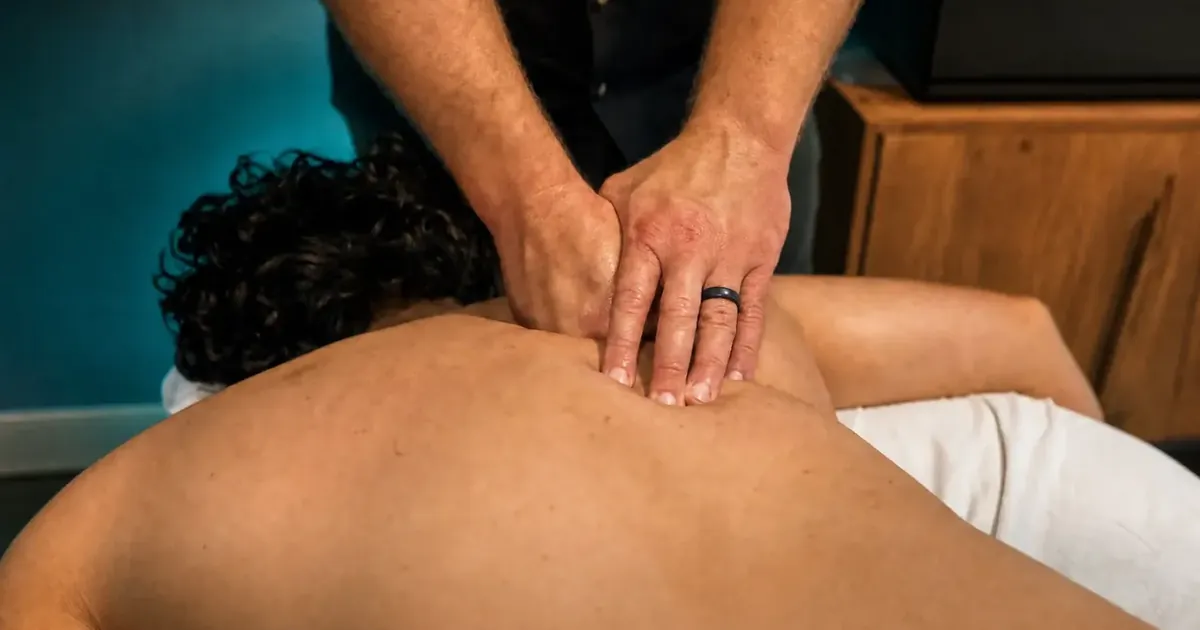
Myofascial release (MFR) is a manual therapy technique in which a trained therapist applies low-load, long-duration pressure and stretch to restricted fascia. Rather than kneading quickly, the therapist sinks into the tissue slowly, waits for it to soften, and follows the release as it happens.
A 2015 systematic review in the Journal of Bodywork and Movement Therapies defines MFR exactly this way: a low-load, long-duration stretch to the myofascial complex intended to restore optimal length, decrease pain, and improve function.
How does myofascial release work?
Two things happen during good myofascial work:
- The nervous system downshifts. Slow, deliberate pressure signals safety to your nervous system. Protective muscle guarding eases, which lets the therapist reach deeper layers without forcing them.
- The tissue itself changes. Sustained pressure and stretch help restricted layers rehydrate, lengthen, and start gliding again.
At Body In Gear we lean hard on the first point. The slower the stroke, the more depth per square inch we can reach — because a calm nervous system lets tissue open instead of bracing against pressure. Fast, aggressive work often makes the body tighten up to protect itself.
Who benefits most from myofascial release?
Myofascial release tends to help people whose pain is rooted in soft tissue rather than in a structural problem that needs a surgeon. Common examples:
- Chronic low back pain that comes and goes without a clear injury
- Neck and upper back tension — especially desk workers and people who carry stress in their shoulders
- Headaches linked to tight neck and jaw muscles
- Stiffness and lost range of motion after an old injury
- Recurring pain after you've already tried PT, chiropractic care, or medication without lasting results
- Pain that travels, such as tingling or radiating discomfort from compressed soft tissue
- Active people who want to stay ahead of injury — what we call pre-hab
Back and neck pain alone affect enormous numbers of people. The World Health Organization estimates that 619 million people worldwide lived with low back pain in 2020, and it's the leading cause of disability globally.
Who should not get myofascial release?
MFR is gentle compared to many manual therapies, but it isn't right for everyone. Talk with your doctor first, or let your therapist know, if you have:
- An acute fracture, open wound, or active infection in the area
- Deep vein thrombosis or a blood clotting disorder
- Active cancer in the treatment area
- Severe osteoporosis
- Pain with red flags such as unexplained weight loss, fever, or loss of bladder or bowel control — these need medical evaluation first
What does the research say about myofascial release?
Honestly: promising, but mixed in quality.
- In a randomized controlled trial of 80 nursing professionals with chronic low back pain, the group receiving myofascial release had significantly better pain and disability scores than a sham group at 8 and 12 weeks.
- The 2015 systematic review concluded that the overall literature is mixed in both quality and results, and called for better trials.
- A 2018 systematic review in Clinical Rehabilitation found the evidence for MFR in chronic musculoskeletal pain was low quality and inconclusive overall.
What does that mean for you? Myofascial release has encouraging results in well-designed trials, but outcomes depend heavily on the therapist's skill, how much treatment you get, and whether the pain is actually fascial in origin. That last part is why diagnosis comes first.
What does a myofascial release session feel like?
Expect slow, firm, sustained pressure — not a quick rub. Your therapist may hold one area for several minutes, waiting for the tissue to soften before moving deeper. Many people describe a "melting" sensation as tight areas let go. Some feel a deep, productive ache. It shouldn't feel sharp or unbearable.
You may feel looser immediately, and mild soreness for a day or two afterward is normal, similar to after a workout.
How is myofascial release different at Body In Gear?
Most clinics fit a few minutes of soft tissue work into a session built around exercise — a massage gun here, brief trigger point work there. Body In Gear provides 1,400% more soft tissue therapy than the average PT or chiropractic clinic, because we dedicate full 50-minute sessions to it.
We also follow a deliberate sequence: medical massage to calm the nervous system, then myofascial release, then manual adhesion technique (MAT) for spots where two muscles have stuck together. That depth and sequencing is the difference between temporary relief and resolving the root cause.
Learn more on our myofascial release service page, or read myofascial release vs. massage and myofascial release for chronic neck and back pain.
Frequently asked questions
Is myofascial release the same as deep tissue massage? No. Deep tissue massage typically uses firm strokes across muscle. Myofascial release uses slow, sustained pressure and stretch held on the fascia until it softens.
How many myofascial release sessions will I need? It depends on how long you've had the problem and what's causing it. Many people notice a change in the first few sessions; chronic issues usually need a series.
Does myofascial release hurt? It can feel intense in tight areas, but it should never be sharp or unbearable. Good MFR works with your nervous system, not against it.
Can myofascial release help sciatica-like pain? It can help when the pain comes from soft tissue compressing or irritating a nerve. Pain from a disc problem or other structural cause needs proper evaluation first.
Do I need a referral for myofascial release? Requirements depend on how you're paying for care and the type of provider. Call the clinic and we'll walk you through your options.
Tried everything and still hurting? Book an evaluation at Body In Gear in Palatine. We'll find out whether your pain is coming from fascia and soft tissue — and build a plan around the cause.
Medical disclaimer: This article is for educational purposes only and is not a substitute for professional medical advice, diagnosis, or treatment. If you have severe, worsening, or unexplained pain, see a physician.
About the author
Zach Mayfield, LMT is the owner of Body In Gear in Palatine, IL, a clinic focused on root-cause, non-pharmaceutical pain resolution through myofascial release, manual adhesion technique, and medical massage.
Clinically reviewed by Darshan Patel, PT, DPT, a Doctor of Physical Therapy at Body In Gear.
References
- Fleckenstein J, et al. Discrepancy between prevalence and perceived effectiveness of treatment methods in myofascial pain syndrome: results of a cross-sectional, nationwide survey. BMC Musculoskelet Disord. 2010;11:32. https://pmc.ncbi.nlm.nih.gov/articles/PMC2836281/
- Cleveland Clinic. Myofascial Pain Syndrome. https://my.clevelandclinic.org/health/diseases/12054-myofascial-pain-syndrome
- Ajimsha MS, Al-Mudahka NR, Al-Madzhar JA. Effectiveness of myofascial release: systematic review of randomized controlled trials. J Bodyw Mov Ther. 2015;19(1):102–112. https://pubmed.ncbi.nlm.nih.gov/25603749/
- World Health Organization. Low back pain fact sheet. https://www.who.int/news-room/fact-sheets/detail/low-back-pain
- Ajimsha MS, Daniel B, Chithra S. Effectiveness of myofascial release in the management of chronic low back pain in nursing professionals. J Bodyw Mov Ther. 2014;18(2):273–281. https://pubmed.ncbi.nlm.nih.gov/24725797/
- Laimi K, et al. Effectiveness of myofascial release in treatment of chronic musculoskeletal pain: a systematic review. Clin Rehabil. 2018;32(4):440–450. https://search.pedro.org.au/search-results/record-detail/51171