Physical therapy for chronic pain works by identifying the specific source of dysfunction — often in the muscles, fascia, or connective tissue — and treating it directly, rather than applying a generic exercise program to every patient. For pain that's lasted weeks, months, or years without a clear diagnosis, that distinction matters more than most people realize.
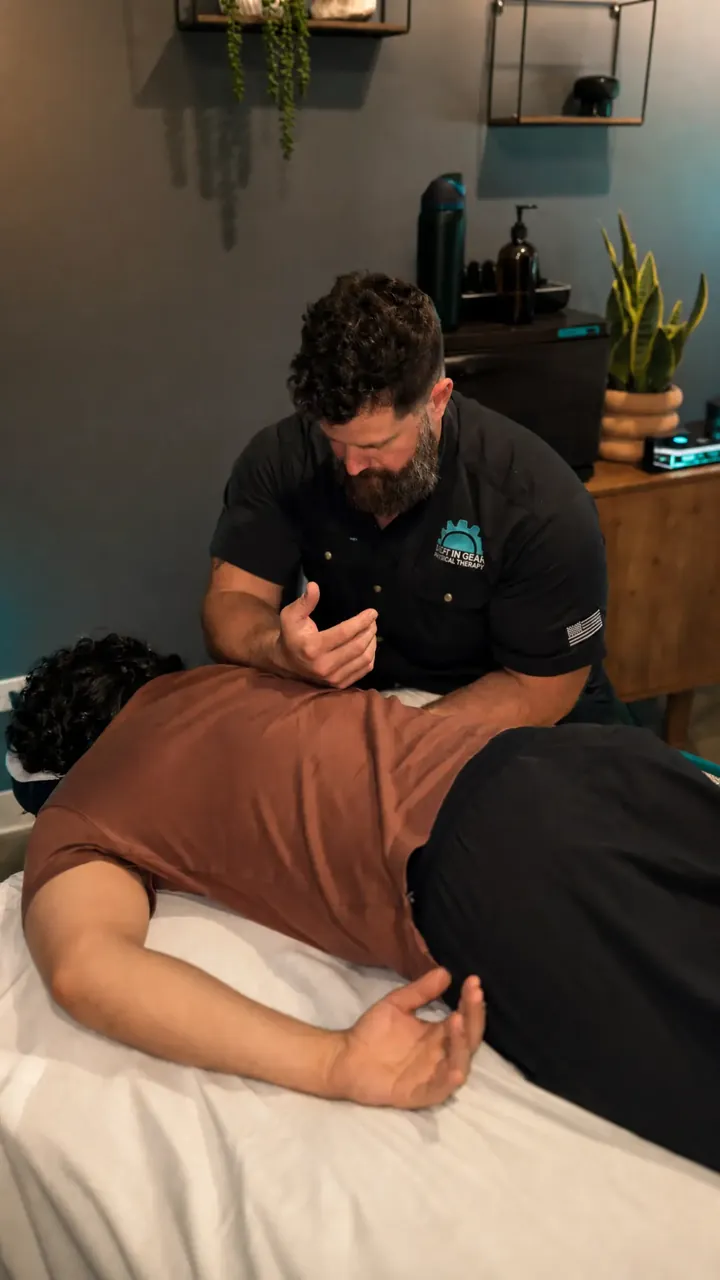
How Does Physical Therapy Help With Chronic Pain?
Chronic pain rarely has a single, obvious cause, which is why an accurate diagnosis has to come before treatment. Research backing conservative, non-surgical approaches is substantial: the American College of Physicians recommends nonpharmacologic therapies, including physical therapy and exercise, as first-line treatment for acute and chronic low back pain rather than defaulting to medication or surgery.
At Body In Gear, every new patient goes through a diagnostic intake before any treatment plan is built — identifying whether pain is coming from a joint issue, a movement pattern, or soft tissue dysfunction in the muscles and fascia.
What's the Difference Between Standard PT and Soft Tissue-Focused PT?
Most physical therapy sessions are built around corrective exercise and strength training, with soft tissue work — if included at all — limited to a few minutes with a massage gun or brief manual pressure. That's standard, and it works for a lot of patients.
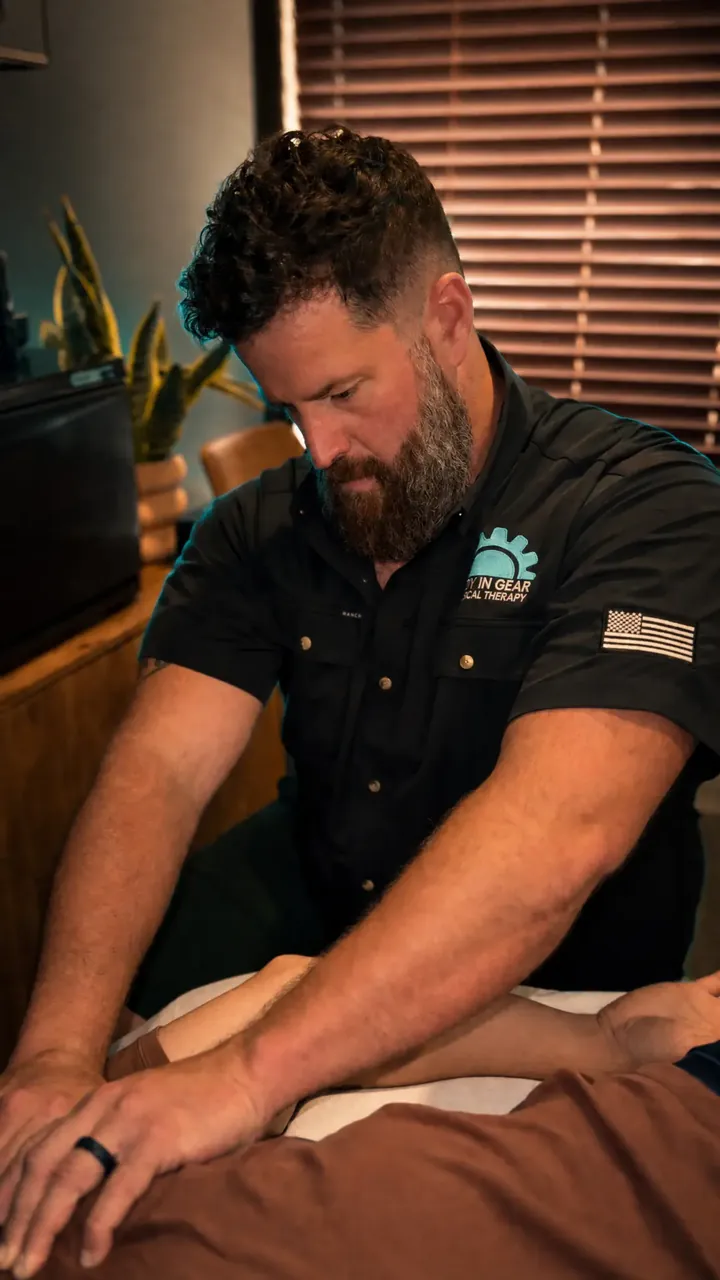
For chronic or unexplained pain specifically, though, the picture is often more complicated. A meaningful share of chronic pain cases trace back to dysfunction in the muscles, fascia, tendons, and ligaments — not the joint or bone itself. Standard PT protocols that spend only a few minutes on soft tissue work may not be enough to resolve that layer of the problem.
Body In Gear structures full sessions around combining corrective exercise with dedicated soft tissue therapy, including myofascial release and medical massage, specifically to address that gap.
Is Medical Massage the Same as Physical Therapy?
Medical massage is one component of soft tissue therapy, not a replacement for physical therapy. It's treatment-focused rather than relaxation-focused, structured by frequency and clinical intent rather than general wellness — and at Body In Gear, it's typically used as a precursor to deeper myofascial and manual work, helping the nervous system relax before more targeted treatment.
Physical therapy as a whole is broader: it includes diagnostic assessment, corrective exercise, strength programming, and — when appropriate — soft tissue therapy like medical massage and myofascial release, all coordinated around a specific treatment plan.
Can Physical Therapy Help If Other Treatments Haven't Worked?
Often, yes — particularly when prior treatment addressed symptoms without identifying the underlying cause. Patients who've tried standard PT, chiropractic care, or medication without lasting results are a large share of who Body In Gear treats. The difference isn't necessarily more treatment — it's a different diagnostic starting point.
Soft tissue dysfunction is frequently underdiagnosed because it doesn't always show up clearly on imaging the way a joint or structural issue might. A clinician who specifically evaluates for it, through hands-on palpation and movement assessment, is more likely to identify it as a contributing factor.
What Does a Physical Therapy Session Look Like at Body In Gear?
Every new patient starts with an evaluation focused on locating the exact source of pain — not just the general area. From there, treatment plans typically combine:
- Corrective exercise and strength training, tailored to the diagnosed dysfunction
- Soft tissue therapy — myofascial release, medical massage, and Manual Adhesion Technique where adhesions are contributing to pain or nerve compression
- Ongoing reassessment as symptoms change, rather than a fixed protocol applied regardless of progress
The goal is resolving the cause, not just reducing pain in the moment.
This content is for general informational purposes and is not a substitute for individualized medical advice. Always consult a licensed physical therapist or physician about your specific condition before starting a new treatment approach.